

Main features:
When a Pendulum Impact Test is performed to ISO 148-1 or ASTM E23, the notch is the most delicate feature of the whole specimen. Its position, angle and surface finish decide where the crack starts, and therefore how much energy the hammer absorbs before the bar breaks. Cutting that notch by hand, or on a general-purpose milling machine, leaves variation between specimens, and variation is exactly what a comparison between heats, welds or heat treatments cannot tolerate.
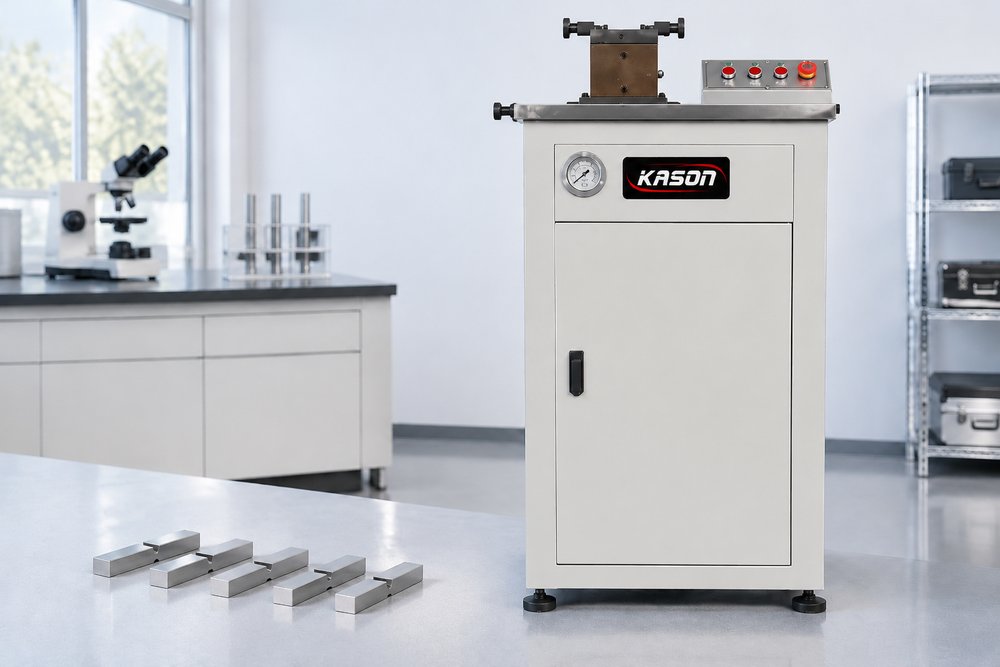
The KASON CSL-B electric broaching machine is built for this single operation. A hydraulic drive holds the broaching speed steady at 2.5 m/min, so every specimen receives the same cutting action from the first stroke to the last. Two broaches are mounted on the machine at the same time: V-notch and U-notch profiles can both be machined without changing a broach, and either two V-notches or two U-notches can be produced in one cycle. A single specimen is finished in about 8 seconds.
The broaches are made of wear-resistant, high-hardness W18Cr4V material, and each one can process more than 10,000 specimens. A dedicated lubrication system protects the cutting edges from damage, while a metal chip and waste collection box built into the cabinet keeps the working area clean.
Key specifications
- Model: KASON CSL-B
- Notch type: V-type and U-type, no broach change required
- Specimen size: 10 (7.5 or 5) x 10 x 55 mm
- Broaching speed and stroke: 2.5 m/min, 350 mm
- Motor power: 400 W, 380 V, 50 Hz
- Overall dimensions and weight: 580 x 400 x 1140 mm, 200 kg
Because the unit is simple to operate and reliable in performance, it fits naturally beside any Pendulum Impact Tester as a dedicated specimen preparation station, keeping notch geometry consistent from batch to batch.